Marketo Auto
When considering the right hose material for your needs, the debate often centers around EPDM and silicone hoses. These two types of hoses are widely used across industries, each offering unique benefits. However, many users still ask, "What is the difference between EPDM and silicone hoses?"
According to industry expert Dr. Laura Meyer, "Understanding the properties of both EPDM and silicone hoses can greatly impact equipment performance." EPDM hoses stand out for their durability and resistance to harsh weather conditions. They excel in automotive and industrial applications. On the other hand, silicone hoses are known for their flexibility and high temperature resistance, making them ideal for applications like HVAC systems and food processing.
Each material comes with its specific strengths and weaknesses, prompting users to reflect on their unique requirements. This article explores the reasons to choose either EPDM or silicone hoses, aiming to provide clarity amidst common misconceptions. By examining the properties of these two materials, you can make more informed decisions for your projects.
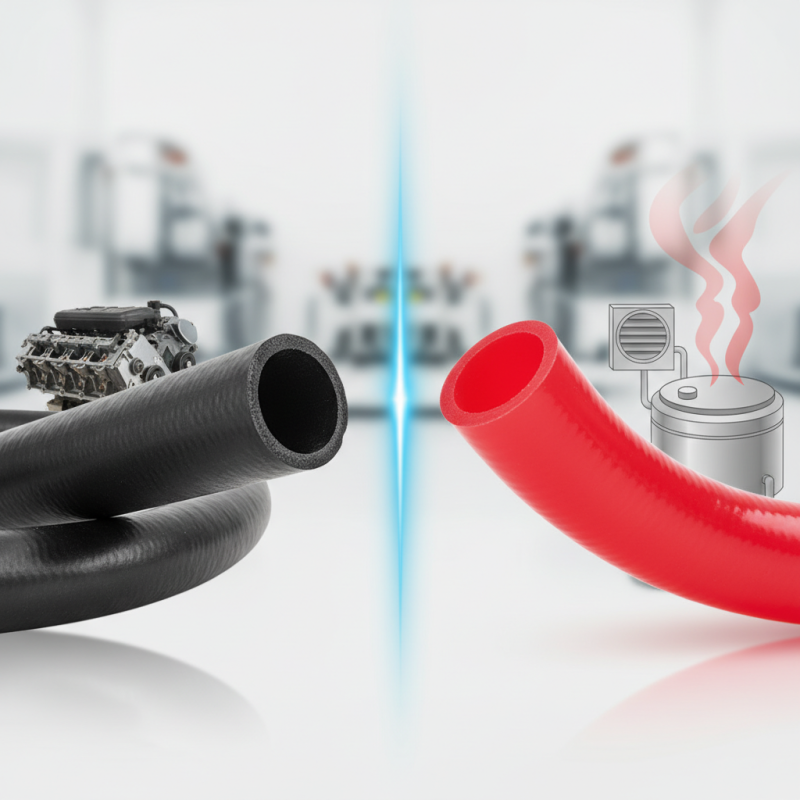
EPDM hoses are favored in automotive applications due to their impressive properties. Ethylene Propylene Diene Monomer (EPDM) rubber is known for its exceptional resistance to heat, ozone, and weathering. According to the Society of Automotive Engineers (SAE), over 70% of automotive manufacturers use EPDM for cooling system hoses. This statistic highlights its reliability under harsh conditions.
The flexibility of EPDM hoses also plays a crucial role. They can bend and twist without losing their integrity. This flexibility reduces the risk of cracking or breaking, especially in dynamic engine environments. Additionally, EPDM hoses maintain excellent dimensional stability. Their ability to withstand temperature fluctuations, from -40°F to 300°F, makes them suitable for various automotive functions.
However, EPDM does have limitations. It is not compatible with petroleum-based oils, making it unsuitable for oil conveyance. This could lead to costly repairs if used incorrectly. Despite this drawback, the overall benefits of EPDM hoses in automotive settings are significant. They serve vital roles in engine cooling, temperature regulation, and atmospheric exposure, reinforcing their essential position within the industry.
EPDM hoses offer various advantages in automotive applications, including excellent temperature and ozone resistance, cost-effectiveness, durability, and flexibility. This chart highlights their benefits compared to industry standards.
Silicone hoses stand out in high-temperature environments due to their remarkable heat resistance. They can maintain flexibility and strength at temperatures exceeding 500°F (260°C). Industry studies show that silicone's thermal stability can lead to a 25% increase in operational efficiency in various applications. This makes them ideal for automotive, aerospace, and industrial uses where extreme heat is prevalent.
In contrast, other materials may fail or become brittle under similar conditions. Research indicates that conventional rubber hoses often degrade quickly, resulting in costly downtimes and replacements. In high-performance contexts, silicone's ability to withstand pressure up to 300 psi enhances safety and longevity.
Tips: When selecting hoses, consider the specific temperature range of your application. Silicone hoses often outperform standard rubber, particularly in extreme conditions. Regular inspections can identify possible weaknesses before they lead to failures. Prioritize quality over cost for long-term benefits. Remember, even the best materials require proper fitting and installation to deliver their full potential.
When considering hose materials, EPDM and silicone stand out for their durability and chemical resistance. EPDM is known for good resistance to heat, ozone, and weather elements. It remains flexible at low temperatures. This makes it ideal for outdoor applications. Silicone, on the other hand, is highly resilient against extreme temperatures and various chemicals. It maintains its properties even under harsh conditions.
In terms of chemical resistance, silicone often performs better than EPDM. It withstands a broader range of acids, bases, and solvents without degrading. This characteristic makes silicone a preferred choice in industries requiring high chemical integrity. However, EPDM has its strong suits, particularly in automotive and industrial applications where temperature fluctuations are common.
Tips: When choosing between the two, consider the specific chemicals you will encounter. Evaluate the temperature extremes in your environment. Always consult technical specifications to avoid misapplications. Ensure your choice aligns with your operational needs. Remember, both materials have their strengths, and the decision should be reflective of your unique requirements.
| Property | EPDM Hoses | Silicone Hoses |
|---|---|---|
| Temperature Resistance | Up to 150°C (302°F) | Up to 200°C (392°F) |
| Chemical Resistance | Good, but sensitive to oils | Excellent, resistant to oils and chemicals |
| Flexibility | Moderate flexibility | High flexibility |
| UV Resistance | Fair | Excellent |
| Lifespan | 5-10 years | 10-20 years |
| Cost | Lower | Higher |
EPDM and silicone hoses are often chosen for their cost-effectiveness, particularly in the long run. Data shows that EPDM hoses can last up to 12 years with proper maintenance. This longevity results in lower replacement costs over time. Silicone hoses, while typically more expensive upfront, boast a lifespan exceeding 20 years under similar conditions. Their resistance to extreme temperatures adds to their value, especially in demanding environments.
Cost analysis reveals that investing in quality hoses can significantly reduce operational expenses. A report from a leading industry organization found that using high-quality materials can lower maintenance costs by 30%. This is critical for industries relying on consistent performance and safety. The initial investment may be higher, but the returns can justify the choice.
Tips: Always consider the working environment for your hoses. Humidity, temperature, and exposure to chemicals can affect longevity. Regular inspections can identify wear early, preventing costly surprises. Choose hoses that suit your specific needs to avoid over or under-specifying.
When selecting EPDM or silicone hoses, understanding the industry standards and certifications is crucial. EPDM (Ethylene Propylene Diene Monomer) hoses follow the ASTM D1056 and SAE J20 standards. These ensure durability in various environmental conditions. In contrast, silicone hoses often adhere to ISO 7840 and FDA compositions, highlighting safety and high-performance metrics.
Data indicates that both EPDM and silicone hoses exhibit high resistance to heat and aging. A study by the Society of Automotive Engineers (SAE) reported that EPDM retains flexibility at temperatures as low as -30°C. Meanwhile, silicone hoses can withstand temperatures up to 200°C. This capability is critical in automotive and industrial applications. Choosing the right material depends on specific use cases.
While standards provide a guideline, real-world performance can vary. Testing in extreme conditions is essential. Differences in manufacturing practices can lead to inconsistency. Evaluating certifications aids in choosing reliable hoses. However, it’s wise to consult industry experts before making decisions. Understanding the nuances helps ensure optimal performance and safety in your applications.
: EPDM hoses resist heat, ozone, and weathering. They remain reliable in harsh conditions, making them popular among manufacturers.
EPDM hoses can bend and twist without losing integrity. This flexibility helps reduce cracking or breaking in engine environments.
EPDM hoses can endure temperatures from -40°F to 300°F. This makes them suitable for various automotive functions.
Yes, EPDM is not compatible with petroleum-based oils. Using it for oil conveyance can lead to costly repairs.
Silicone hoses maintain flexibility and strength at temperatures over 500°F. They enhance operational efficiency in extreme heat applications.
EPDM hoses can last up to 12 years, while silicone hoses can exceed 20 years with proper maintenance.
Yes, investing in quality hoses can reduce maintenance costs by 30%. Long-term savings outweigh initial higher investments.
Consider humidity, temperature, and chemical exposure. Regular inspections can help identify potential issues early.
Proper fitting and installation are crucial. Even the best materials need correct installation to perform optimally.
Quality should take precedence over cost. Higher-quality hoses can offer greater longevity and performance in the long run.
When considering hose options for various applications, one may ask, "What is the difference between EPDM and Silicone hoses?" EPDM hoses are particularly advantageous in automotive settings due to their excellent resistance to heat, ozone, and weathering, making them a reliable choice for various vehicle components. Silicone hoses, on the other hand, excel in high-temperature environments, maintaining flexibility and performance even under extreme conditions.
In terms of durability, both EPDM and Silicone hoses exhibit impressive chemical resistance, although their applications might vary based on specific industry needs. Cost-effectiveness also plays a role, with both types offering reliable long-term performance, thus providing good value over time. Lastly, adherence to industry standards and certifications further ensures that both EPDM and Silicone hoses meet safety and quality benchmarks, helping users make informed decisions based on their unique requirements.
