Marketo Auto
Turbochargers operate beside exhaust gases that can exceed 900°C. Their oil feed pipes carry a small but essential stream of lubricant through this severe environment. When the engine stops, residual heat can soak into the pipe and bake stagnant oil into hard carbon deposits.
Why do turbo oil feed pipes get carbon buildup? The usual causes include overheated oil, poor-quality lubricant, incorrect viscosity, restricted flow, and repeated hot shutdowns. A narrow passage can become partially blocked, even when the outside looks clean. That restriction reduces turbocharger lubrication and may delay oil delivery during startup. Small deposits can create expensive consequences.
Automotive engineer Jason Fenske explains the principle clearly: “Turbochargers live in a severe thermal environment, so oil quality and temperature control matter.” His point is simple. Prevention begins before deposits become visible. Use the manufacturer’s specified oil, replace it at sensible intervals, and inspect the feed pipe during turbocharger service. Check for kinks, crushed sections, and poorly positioned heat shields. The pipe should not touch the exhaust housing or glowing manifold.
Allowing a hot turbocharger to cool briefly can also help. Yet this is not a perfect cure. Modern engines, driving conditions, and oil formulations vary widely. A vehicle used for towing needs more care than one driven gently across town. A clean-looking pipe is not proof of safe flow. If warning smoke, turbo noise, or oil starvation appears, professional testing should follow quickly. Prevention is cheaper than guessing.
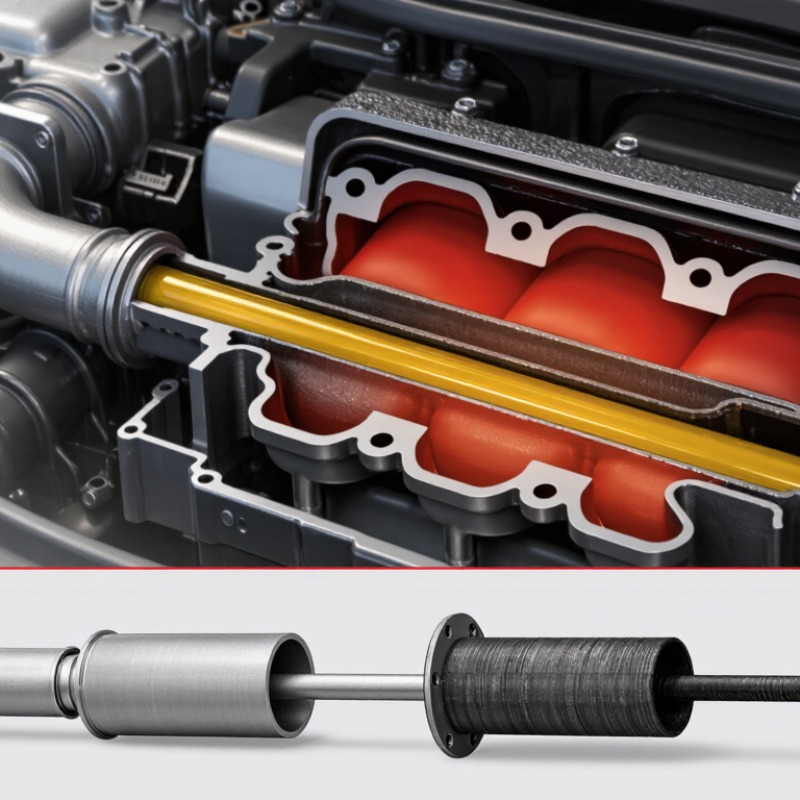
Carbon builds up in turbo oil feed pipes when hot oil remains trapped after engine shutdown. The turbocharger’s center housing can stay extremely hot, even when the engine is no longer running. This heat breaks down the oil into sticky deposits called coke. Narrow pipes are especially vulnerable because a small deposit can reduce oil flow quickly.
High exhaust temperatures make the problem worse. Poor-quality or degraded oil leaves heavier residues under thermal stress. Dirt, incorrect oil viscosity, and a partially blocked filter can also limit circulation. In workshop inspections, dark flakes often appear near the turbocharger inlet. That detail matters. Carbon is not always the original fault; restricted flow may have started the overheating cycle.
Use the specified oil and replace it at sensible service intervals. Inspect the feed pipe for kinks, contamination, and heat damage. A clean pipe is essential. Heat shielding can reduce radiant heat, but it must not touch moving or extremely hot components. After severe driving, a short controlled cooldown may help, especially on older systems. Modern water-cooled turbochargers may need less idling, so endless cooldown periods are not automatically better. I once treated cooldown time as the complete solution. It was not. Oil quality and unrestricted flow usually deserve more attention. Avoid sealants that can break away inside the line. Even a tiny fragment can travel toward the turbocharger bearing.
How to Prevent Carbon Buildup in Turbo Oil Feed Pipes?
Oil selection is the first defense against carbon buildup. Choose the exact viscosity and performance category specified by the engine maker. Do not select oil by viscosity alone. A high-quality synthetic formulation usually offers stronger oxidation resistance and lower volatility under turbocharger heat. However, “synthetic” is not automatically suitable. Check the required API, ACEA, or manufacturer specification.
The API 1509 licensing system includes high-temperature oxidation and deposit-control testing. Its Sequence IIIH test runs for 90 hours, with oil temperatures reaching about 150°C. ASTM D5800 also measures Noack volatility, which helps assess oil loss through evaporation. Lower volatility can reduce the light fractions entering hot areas and forming residue. Keep the oil clean, too. Used oil carrying soot, fuel, or coolant can coke faster inside a narrow feed pipe. Shorter drain intervals may be sensible in dusty, heavily loaded, or frequently idling service. Real workshops often find neglected oil more damaging than an ordinary operating temperature.
Use a clean filter and inspect the feed pipe during major service. A thin, hard black layer is an early warning. Oil flow may already be restricted. I have seen maintenance plans focus on turbo replacement while ignoring contaminated oil. That is an expensive blind spot. Oil analysis can reveal oxidation, viscosity growth, fuel dilution, and wear metals before failure. Yet laboratory results are not perfect. Sampling location and timing matter. Pair the report with service history and physical inspection.
| Oil or Maintenance Dimension | Recommended Target or Practice | How It Helps Prevent Carbon Buildup | Verification Method | Maintenance Response |
|---|---|---|---|---|
| Correct Viscosity Grade | Use the viscosity grade specified for the engine, climate, and operating load. | The correct viscosity maintains stable oil flow through the turbocharger bearing system and reduces excessive heat and friction. | Compare the oil label and service records with the equipment manual. | Use OEM specification |
| Oil Performance Classification | Select oil meeting the required current performance category for the engine and emission-control system. | Modern engine oils are formulated with detergents, dispersants, antioxidants, and anti-wear additives that help control oxidation deposits. | Check the performance claims and approval requirements on the product data sheet. | Do not downgrade |
| Base Oil Quality | Prefer a high-quality synthetic or synthetic-blend oil when permitted by the equipment manufacturer. | Higher-quality base oils generally provide better oxidation resistance and lower deposit-forming volatility during high-temperature turbocharger operation. | Review the technical data sheet and application recommendations. | Choose oxidation-resistant oil |
| Oil Volatility | Select a formulation with lower evaporation loss; a Noack volatility value of 15% or lower is a useful screening reference when available. | Lower volatility reduces the amount of oil vapor exposed to hot turbocharger surfaces, limiting residue formation. | Check the Noack volatility value in the technical data sheet. | Use as a comparison value |
| Sulfated Ash and Aftertreatment Compatibility | Use the required low-, mid-, or standard-ash formulation specified for the engine and exhaust aftertreatment system. | Lower ash can reduce inorganic residue accumulation, although it does not replace the need for proper oil-change and temperature control. | Confirm the oil category and ash-related requirements in the equipment documentation. | Match the system requirement |
| Oxidation Stability | Use oil with a documented oxidation-control performance suitable for turbocharged engines. | Oxidized oil becomes thicker and forms varnish, sludge, and hard carbon deposits that can restrict the oil feed pipe. | Review oxidation-test data where published and monitor oil-condition trends. | Trend oil condition |
| Oil-Change Interval | Follow the manufacturer’s interval and shorten it for severe service, high ambient temperature, dust, towing, or extended idling. | Aged oil contains more oxidation products, fuel dilution, soot, and suspended contaminants that promote deposits. | Track operating hours, mileage, load, and oil-analysis results. | Avoid overextended drains |
| Oil Filtration | Install the correct-quality filter and replace it at the prescribed interval. | Effective filtration removes abrasive particles and sludge that can restrict the narrow turbocharger oil feed passage. | Inspect the filter specification and check for bypass-valve or seal damage. | Replace on schedule |
| Oil Cleanliness During Servicing | Keep the filler area, containers, funnels, and oil lines clean; prevent dust, sealant, and lint from entering the system. | Foreign particles can obstruct the feed pipe and accelerate bearing wear, which increases heat and deposit formation. | Inspect the service area and examine drained oil for visible contamination. | Use clean equipment |
| Fuel Dilution and Water Contamination | Investigate any rising fuel dilution, milky appearance, abnormal water content, or rapid oil-level increase. | Fuel and water reduce lubricant viscosity and oxidation resistance, increasing wear, sludge, and thermal deposit risk. | Use laboratory oil analysis or approved field inspection methods. | Correct the source promptly |
| Turbocharger Oil Feed Pipe Condition | Inspect for kinks, restricted passages, heat damage, leaks, loose fittings, and hardened residue. | A restricted or overheated pipe limits oil flow and increases the temperature of the turbocharger bearing area, accelerating coking. | Visual inspection, flow check, and internal inspection when required. | Replace if restricted |
| Heat Shielding and Routing | Keep the oil feed pipe correctly routed and protected from direct exhaust or turbine heat. | Excessive external heat can thermally degrade oil inside the feed line and create hard carbon deposits. | Check routing, clamps, heat shields, and clearance during service. | Restore protection |
| Engine Shutdown After Heavy Load | After sustained high load, allow a brief controlled cool-down period according to the equipment instructions before shutdown. | Cool-down reduces heat soak after oil flow stops and lowers the risk of oil coking in the turbocharger bearing housing and feed pipe. | Review operating procedure and driver or operator practices. | Follow cooldown guidance |
| Oil-Pressure Verification | Maintain oil pressure within the manufacturer’s specified range at idle and operating speed. | Insufficient pressure reduces turbocharger lubrication and cooling, allowing higher bearing temperatures and faster deposit formation. | Use the vehicle or machine diagnostic system and a calibrated pressure gauge when necessary. | Find the cause before operation |
| Oil Analysis Trend | Monitor viscosity, oxidation, nitration, soot, wear metals, fuel dilution, and contamination trends. | Trend data can identify deteriorating oil quality before deposits cause a restricted turbocharger feed pipe or bearing failure. | Submit periodic samples to a qualified laboratory. | Use trend-based maintenance |
| Important: The targets above are general engineering guidance. The equipment manufacturer’s oil viscosity, performance category, oil-change interval, filtration requirements, and aftertreatment compatibility requirements always take priority. | ||||
Carbon buildup in turbo oil feed pipes often begins with overheated oil, not dirty oil alone. When engine temperature rises, oil trapped near the turbo bearing can lose its lighter compounds. It then thickens into coke, which narrows the passage and restricts bearing lubrication. Small passages suffer first. In workshop inspections, I look for hard black deposits, scorched fittings, and discolored pipe insulation. These clues often point to repeated heat soak after shutdown.
Keep coolant temperature stable by maintaining the radiator, thermostat, coolant level, and airflow path. A clean cooling system helps the turbo operate within its intended thermal range. Avoid long periods of heavy boost followed by an immediate shutdown. Let the engine run gently for several minutes, especially after towing, climbing, or high-speed driving. This allows oil circulation and housing temperatures to fall gradually. It is easy to forget. I sometimes see operators blame the feed pipe when poor cooling caused the original failure.
Use the specified oil grade and change it at intervals suited to the engine’s workload and contamination level. Inspect the feed pipe for kinks, crushed sections, loose connections, and heat damage during routine servicing. A heat shield can reduce radiant heat, but it must not touch the pipe or block nearby airflow. Check the return line too. A restricted drain can keep hot oil inside the turbo and accelerate coking. Cleaning deposits without finding the heat source may provide only temporary relief. Temperature logs or infrared checks can reveal patterns that a quick visual inspection misses.
Inspect the oil feed pipe whenever servicing the turbocharger or changing engine oil. Work only after the engine has cooled completely. Look for dark staining, hardened deposits, crushed sections, loose fittings, and heat damage near the exhaust housing. A clean outer surface proves little. Carbon can hide inside the narrow passage.
Remove the pipe according to the vehicle’s service instructions. Protect open oil ports from dust. Flush the pipe with an approved solvent, then blow through it using controlled, low-pressure air. Never force a wire through the passage. It may scratch the tube or leave debris inside. Check both sealing washers and replace damaged ones. If the pipe remains restricted, badly discolored, cracked, or distorted, replacement is safer than repeated cleaning. I once underestimated a small restriction; the turbo still received oil, but not enough during hot operation. That judgment was poor.
Tips: Compare the removed pipe with a new one if possible. Shine a light through the passage. Record its routing before removal. Keep it away from extreme exhaust heat during refitting. Use the specified torque from a reliable service manual, not guesswork. After installation, prime the turbo oil circuit and verify oil flow before extended driving. Recheck for leaks after the first heat cycle. Small mistakes matter.
Preventing carbon buildup in turbo oil feed pipes starts with disciplined preventive maintenance. Dirty oil, excessive heat, and delayed servicing can turn a narrow passage into a restricted channel. Use the correct oil grade specified for the engine, and replace it at suitable service intervals. A fresh filter matters too. Small particles can damage bearings before visible symptoms appear.
Inspect the oil feed pipe during scheduled turbocharger checks. Look for dark sludge, hardened deposits, crushed sections, and loose connections. Check the drain path as well, because poor drainage can force hot oil to remain inside the turbocharger.
After demanding operation, allow the engine to idle briefly before shutdown. This helps reduce heat soak and limits oil coking around the bearing housing. It is a small habit.
Oil leaks deserve immediate attention. A minor seep can introduce dirt, reduce pressure, or hide a developing restriction. Measure oil pressure when symptoms appear, rather than relying only on sound or smoke.
Unusual whistling, blue exhaust smoke, slow boost response, and rising oil consumption require inspection. Keep service records with mileage, oil type, operating conditions, and replaced parts. They reveal patterns that memory misses.
A perfect maintenance schedule does not exist. Dusty sites, short trips, and heavy loads may require earlier inspections than standard intervals. I have seen clean oil systems neglected because the engine still ran normally. That assumption is risky.
Hot oil can remain trapped near the turbocharger after shutdown. The heat breaks down the oil into sticky carbon deposits. Narrow passages clog quickly. Small deposits matter.
High exhaust temperatures increase the risk. Poor-quality or degraded oil may leave heavier residues. Incorrect viscosity, dirt, and restricted filters can reduce circulation. Poor cooling can worsen the cycle.
Look for dark flakes near the turbocharger inlet. Hard black deposits, scorched fittings, and damaged insulation are useful clues. A pipe may look clean outside but remain blocked inside. Visual checks can miss important details.
Maintain the radiator, thermostat, coolant level, and airflow path. Avoid heavy boost followed by immediate shutdown. After towing, climbing, or fast driving, allow a gentle cooldown period. Do not idle endlessly.
Not necessarily. Water-cooled systems may need less idling after normal driving. Severe heat and heavy loads still justify a controlled cooldown. I once treated cooldown as the complete solution. It was not.
Inspect it after the engine has cooled completely. Check for kinks, crushed sections, loose fittings, contamination, and heat damage. Protect open oil ports from dust during removal. Record the pipe’s routing before refitting.
Flush it with an approved solvent and controlled, low-pressure air. Never push a wire through the passage. A wire may scratch the tube or leave debris behind. Replace the pipe if restriction remains.
Replace damaged sealing washers and use the specified tightening torque. Prime the turbocharger oil circuit before extended driving. Verify oil flow and inspect for leaks after the first heat cycle. Small mistakes matter.
Carbon buildup in turbo oil feed pipes can restrict lubrication, reduce turbocharger performance, and eventually cause serious component wear. Why do turbo oil feed pipes get carbon buildup? The main causes include degraded or contaminated oil, excessive heat, poor oil circulation, and engine shutdowns immediately after heavy operation. Using the correct high-quality oil and maintaining proper oil levels and change intervals helps reduce deposits. It is also important to manage engine temperature, allow sufficient cooling after demanding driving, and prevent oil from overheating and coking inside the feed pipe.
Regular inspection is essential for identifying restricted flow, discoloration, leaks, or hardened deposits before they lead to turbocharger damage. Depending on the pipe’s condition, professional cleaning or replacement may be necessary, especially when internal carbon cannot be removed safely. A preventive maintenance routine should include checking oil quality, monitoring engine and turbocharger temperatures, inspecting connections, and following recommended service intervals. These simple practices support reliable oil delivery, improve turbocharger life, and reduce the risk of costly repairs.
